





Knowledge - Industrial electricity price
Industrial electricity price 2026–2028 — Subsidy with mandatory counter-performance
The European Commission has approved the German industrial electricity price on April 16, 2026, for aid purposes. 91 sectors of the KUEBLL partial list 1 receive a electricity price relief for the billing periods 2026 to 2028 with a target price of 5 ct/kWh — 50 of % % the electricity consumption is subsidized at the wholesale reference price. In return, at least 50 % of the received aid must be reinvested within 48 months in decarbonization or flexibility measures. CUBE CONCEPTS models over 250 operating variants to optimize this reinvestment decision.
5 cents per kWh
Target price (lower limit)
for the subsidized amount of electricity
50%
Reinvestment obligation of the subsidy
in 48 months
91 Sectors
KUEBLL sub-list 1
Appendix I (energy-intensive)
16.04.2026
EU State Aid Approval
BMW Press Release
Table of Contents
ToggleWhat regulates the industrial electricity price
Industrial electricity price
Temporary state aid for power-intensive and trade-intensive companies from 91 eligible sectors, which subsidizes part of the electricity costs at the target price of 5 ct/kWh. Legal basis: EU Commission’s Clean Industrial Deal State Aid Framework (CISAF), Section 4.5. Applicant in Germany: Federal Office for Economic Affairs and Export Control (BAFA).
The industrial electricity price is not a tariff but an aid under EU aid law. The EU Commission approved the German program on April 16, 2026 — with the explicit condition that the subsidized companies reinvest in decarbonization. Without this counterpart, the electricity price relief would not be permissible under aid law.
The funding period covers the accounting years 2026, 2027 and 2028. The CISAF aid framework allows payments until December 31, 2030, but German funding only runs for three years. Federal Minister of Economics Katherina Reiche described the EU approval in the BMWE press release as a „major success”.
Eligible Sectors - the KUEBLL Partial List 1
Companies from 91 sectors with a significant risk of carbon leakage are eligible to apply, as listed in Annex I of the EU Guidelines for State aid for climate, environmental protection, and energy (CEEAG 2022). This includes substantial parts of the traditional energy-intensive industry:
- Chemistry and Plastics — Basic chemical elements, fertilizers, rubber and plastic products
- Glass and ceramics — container glass, flat glass, technical ceramics
- Metal production and processing — steel, aluminum, copper
- Paper and pulp — Paper, cardboard, cellulose
- Semiconductor manufacturing — Wafers, microelectronics
- Cement and building materials — Cement clinker, lime, plaster
The assignment is made using the WZ-2008 classification (economic sectors) at the end of the respective accounting year. If activities are carried out in multiple economic sectors, the main activity is decisive. Additional sectors can be included subsequently by commission decision, provided that electricity and trade intensity are proven.
Location and structural requirements
The points of withdrawal must be located in Germany. Indirect consumption within industrial parks (compressed air, cooling, heating, steam, water) can be attributed to the point of withdrawal if it is clearly operationally distinguishable. Decommissioning or relocation of the subsidized point of withdrawal must be reported.
Companies in difficulty are excluded — that is, companies with pending insolvency proceedings, with EU Commission recovery orders not being complied with, or with registration in the debtors' register under § 882b ZPO.
This is how the subsidy is calculated
The calculation proceeds in four steps—starting from the wholesale reference price up to the disbursed subsidy per settlement year.
| Size | Determination | Sample value for billing year 2026 |
|---|---|---|
| Eligible electricity quantity | 50 annual electricity consumption % of the collection point | at 10 GWh consumption: 5 GWh |
| Reference price | Annual average of base future contracts from the previous year with delivery in the settlement year (market area Germany) | Previous year's future for 2025: approx. 8.7 ct/kWh |
| Subsidy rate | 50 % of the reference price, with a lower limit of 5 ct/kWh as the target price | 50 % out of 8.7 = 4.35 ct/kWh; effectively through the target price threshold to about 1.85 ct/kWh |
| Care allowance | reimbursable amount of electricity x subsidy rate | 5 GWh × 1.85 ct/kWh ≈ 92,500 €/year |
The mechanism ensures that companies achieve the targeted price of at least 5 ct/kWh for the subsidized amount of electricity — at higher market prices the difference is subsidized to the 50 % value, at low market prices the target price limits the subsidy downward.
Calculation methodology according to the BMWE funding guideline draft, as of January 2026. Reference price example based on settlement data 2025.
The reinvestment obligation — core of the aid construction
The electricity price relief is not unconditional. Applicants must, when submitting an application, commit themselves in a self-declaration to invest at least 50% % of the received aid amount in decarbonization or flexibility measures. The realization of this reinvestment must take place within 48 months after the aid is approved.
The three obligations in detail
1. Minimum quota: 50 % of the aid amount disbursed. 2. Implementation deadline: 48 months from approval. 3. Obligation to provide evidence: upon completion – but no later than the end of the 48-month period – a statement of the measures carried out, including the investment volume, must be submitted to the BAFA.
The reinvestment obligation is legally necessary for state aid: Without consideration, the electricity price relief would be a pure subsidy, which would contradict EU competition rules. The logic of the obligation follows the CISAF principle – state aid is permissible if it simultaneously triggers transformation.
Double Taxation Prohibition Volumes of electricity for which electricity price compensation (SPK) is applied for in the same billing year cannot be taken into account under the Industrial Electricity Price Support Guideline. A measure may not be counted as a reinvestment for ISP and SPK simultaneously. The delimitation from SPK-eligible electricity volumes is a mandatory part of the application.
Time division possible: The investment amounts can be spread over several years, as long as the overall 48-month period is observed. This creates flexibility for larger investments that require lead time for realization.
Which reinvestments are recognized
The funding guideline defines recognized reinvestments as investment measures with a measurable contribution to the transformation of the energy supply or the reduction of electricity-related emissions. Pure operating expenses, organizational measures, and preparatory concepts are excluded.
The range of recognized measures is broad—from expanding renewable generation capacity to energy storage and load flexibility, and on to the electrification of heat generation. As such, the list covers the key technical levers of the industrial energy transition.
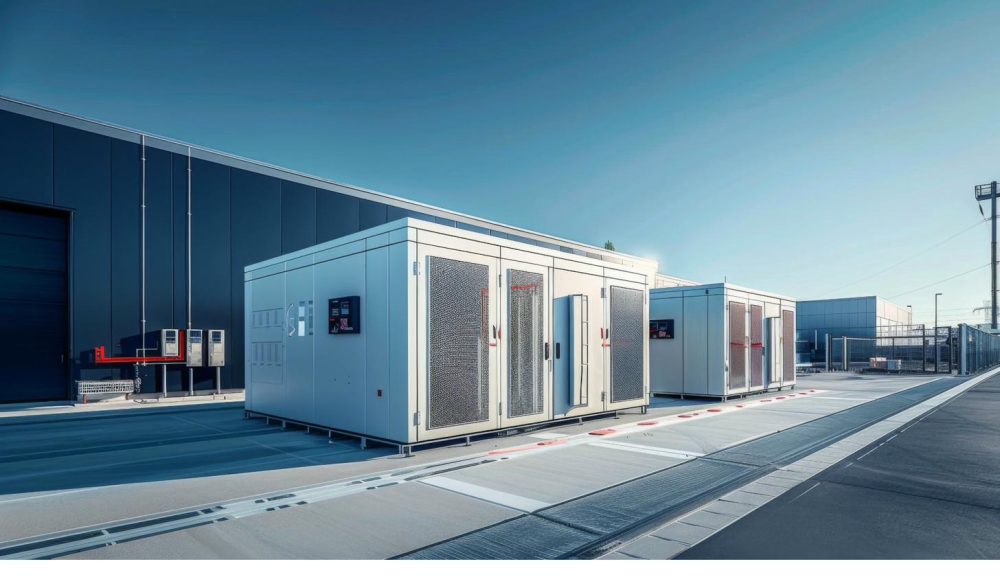
Industrial battery storage: explicitly recognized reinvestment measure within the CISAF framework.
| Measure category | Examples | Status |
|---|---|---|
| Renewable generation capacity | Photovoltaics (rooftop, utility-scale), wind, biomass, geothermal | ✅ Recognized |
| Energy storage | Battery energy storage systems (BESS), thermal storage, hydrogen storage | ✅ Recognized |
| Demand-side flexibility | Load management, controllable loads, load flexibility | ✅ Recognized |
| Energy efficiency | Process optimization, heat recovery, efficient drives | ✅ Recognized |
| Electrification | Electric heat generation, Electric furnaces, Power-to-Heat | ✅ Recognized |
| Electrolyzers | Hydrogen production from renewable or low-carbon electricity | ✅ Recognized |
| Long-term PPAs | Long-term power purchase agreements for renewable energy | ✅ Recognized |
| Operating Expenses (OPEX) | Electricity bills, maintenance costs excluding capital expenditures | ❌ Not recognized |
| Organizational measures | Energy Management Certification, Compliance Implementation | ❌ Not recognized |
| Preparatory Concepts | Consulting, studies, planning without immediate investment reference | ❌ Not recognized |
| Double-funded measures | Investments that have already received other funding | ❌ Not recognized |
Advance clarification possible: Upon request, the BAFA decides on the eligibility of a measure before the investment. For larger projects – such as BESS systems with a six- to twelve-month implementation phase – this creates investment security before capital is committed.
Third-party implementation via Contracting — permissible under state aid law
The funding guideline expressly permits the reinvestment measure to be implemented not by the applicant company itself, but by a third party. This opens up a scenario that is crucial for many energy-intensive medium-sized companies: fulfilling the reinvestment obligation without tying up their own capital.
Applicant remains responsible
The formal responsibility for the timely and factually correct implementation of the reinvestment remains with the company that applied for the subsidy. BAFA certifications and deadline compliance are non-delegable.
Third party bears CapEx
The third-party investor—typically an energy service provider or a Contracting partner—finances and operates the facility. The applicant company provides the site, the electricity purchase agreement, and, if applicable, the load profile.
Credit to the applicant
The measure implemented by the third party will be counted as a fulfilled reinvestment at the applicant company, provided that the factual link between the subsidy and the investment can be proven. Double counting is excluded.
Factual reference demonstrable
The contractual structure, investment sum, and timeline must document the relevance to the subsidy. CUBE CONCEPTS supports with the contractual and operational structuring.
For medium-sized companies with limited financing options, third-party implementation is often the only feasible way to realize substantial reinvestment within the 48-month period. Without this option, investment pressure and liquidity would conflict — the funding guideline structurally resolves this conflict.
The Flexibility Bonus — up to an additional 10 %
The funding guideline provides for an optional bonus mechanism that % increases the aid by up to 10 — if the applicant company contributes an increased share of its reinvestment in measures to increase demand flexibility.
The two cumulative prerequisites
1. At least 80% % of the total investment to meet the reinvestment obligation must be spent on measures to increase demand flexibility. 2. At least 75 % of the aid amount granted as a bonus must also be invested in such flexibility measures.
This means the flexibility bonus is structurally linked to investments in storage and load management. Battery storage is the textbook solution for “increasing demand flexibility”—it shifts load peaks, smooths load profiles, enables grid-friendly behavior, and stabilizes self-consumption.
Example Calculation Flexibility Bonus
With a base subsidy of €462,500 per year for 50 GWh, the bonus +10 adds an % additional €46,250 per year — cumulatively over three billing years, a total subsidy of €1.52 million instead of €1.39 million. The reinvestment obligation increases accordingly to €760,000 (50 % of €1.52 million), of which at least €608,000 (80 %) must flow into flexibility measures — and an additional €75 % of the bonus amount of €138,750, i.e., a further approximately €104,000.
The strategic calculation: Those who are already investing in flexibility (storage, intelligent load management) are essentially getting the bonus „right away.” Those who do not take advantage of the bonus forgo 10 % additional subsidies — and the structural competitive advantage that flexibility creates in an increasingly volatile electricity market.
Effective relief & economic evaluation of the industrial electricity price
Effective Relief — The Honest Bill
The political communication of the industrial electricity price promotes a „target price of 5 ct/kWh”. However, the effective relief effect is significantly lower. The reasons are structural — not polemical.
01
Only 50 % of the total power output was generated
Half of the electricity consumption will be paid for at the full market price — the subsidy only applies to the other half.
02
Only 50 % of the reference price spread
The aid rate is 50 % of the wholesale reference price — and applies only insofar as the target price of 5 ct/kWh is not exceeded as a lower limit.
03
50 % Reinvestment Requirement
Half of the received money is tied to reinvestment obligations, meaning it doesn't serve as a liquidity relief but rather as a regulated investment requirement.
04
Administrative and compliance costs
Application submission, auditor’s report for 10 GWh or more, measures documentation, and, if applicable, advice — these costs are based on the nominal amount.
Businesses will ultimately receive a net relief of a single-digit percentage of their total electricity costs — not the nominally communicated relief. The German Chemical Industry Association and practical voices like the Siempelkamp Foundry have publicly discussed this. However, the industry still views the industrial electricity price as a step in the right direction — but as a step whose economic viability primarily arises from reinvestment measures, not from direct electricity price relief.
The strategic consequence
Whoever correctly interprets the reinvestment measure as a BESS, PV system, load flexibility, or efficiency project with its own cash flow will recapture the added value of the subsidy through self-consumption, grid fee optimization, multi-use revenue, and market participation. The reinvestment then becomes not a compliance cost, but the actual profit center of the ISP program.
Application and Proof Process at the BAFA
Applications are submitted exclusively electronically via the BAFA portal. Only one application is permitted per company and billing year. Applications are submitted retroactively for the respective completed billing year – the first application round in early 2027 will cover the 2026 billing year.
01
Sector and WZ-2008 Clarification
Check if your own economic sector is included in KUEBLL Sublist 1. If you work in multiple NACE codes, the main activity at the end of the accounting year is decisive.
Duration: 1-2 weeks, possibly with a tax advisor or energy manager
02
Document electricity consumption and point of consumption
Proof of creditable electricity consumption, demarcation from third-party quantities, recording of indirect consumption in the industrial park, demarcation from SPK electricity quantities.
Duration: 2–4 weeks, often with energy management system
03
Reinvestment Plan and Self-Declaration
Clarification of planned reinvestment measures and self-declaration regarding the 48-month implementation. Optional: Prior clarification of eligibility by BAFA.
Duration: 4–6 weeks Action planning
04
Submit online application in BAFA portal
The application deadline ends no earlier than March 31st and no later than September 30th of the application year. For the 2026 billing year, the deadline ends on March 31st, 2027 (BAFA).
Duration: 1–2 weeks input + evidence
05
WP note from 10 GWh
For electricity consumption that is eligible for calculation from 10 GWh onwards, an audit report from an auditor or a similar authority must be attached to the application, covering the relevant factual information.
Weight training order: 4-8 weeks
06
Assessment notice and payout
The BAFA is reviewing the application. If the review is positive, a decision notice will be issued and payment will be made in the following year (subsidy 2026 → payout 2027). Approval is subject to the reservation of clawback and budgetary funds.
Decision-making period: 8–16 weeks
07
Realize reinvestment (within 48 months)
Implementation of the promised reinvestment measures within 48 months of approval. Annual allocation of investment sums is permitted.
First: 48 months from approval
08
Proof of Submission to BAFA
Upon completion — but no later than the end of the 48-month period — submit a report on the measures implemented, including the investment volume, to the BAFA. Repayment may be demanded in case of missed deadlines.
First: no later than 48 months after approval
Practical examples — two size classes modeled
CUBE CONCEPTS models over 250 operating variants to optimize the reinvestment decision — from 5 GWh special machine construction to 200 GWh chemical plant. Two typical configurations illustrate the scale of the situation.
Example 1: Medium-sized companies with an annual consumption of 10 GWh
| Position | Value |
|---|---|
| Accrued electricity consumption (50 %) | 5 GWh/year |
| Assumption of previous year's future reference price | 8.7 ct/kWh |
| Effective subsidy rate (50 % minus the target price floor) | approx. 1.85 ct/kWh |
| Basic subsidy per year | approx. 92,500 € |
| Over three billing years, cumulative | approx. 277,500 € |
| Reinvestment obligation (50 %) | approx. 138,750 € |
| Optional Flex Bonus (+10 %) | + approx. 27,750 € |
| WP note required? | Yes (≥10 GWh) |
Implementation options: BESS with approx. 0.5 MW / 1 MWh as a third conversion via Contracting · On-roof photovoltaic systems 200–400 kWp for self-consumption · Combination models.
Example 2: Mid-Cap with 50 GWh annual consumption
| Position | Value |
|---|---|
| Accrued electricity consumption (50 %) | 25 GWh/year |
| Assumption of previous year's future reference price | 8.7 ct/kWh |
| Effective subsidy rate | approx. 1.85 ct/kWh |
| Basic subsidy per year | approx. 462,500 € |
| Over three billing years, cumulative | approx. 1,387,500 € |
| Reinvestment obligation (50 %) | approx. 693,750 € |
| Optional Flex Bonus (+10 %) | + approx. 138,750 € |
| WP note required? | yes |
Implementation options: BESS-Park 2–4 MW / 4–8 MWh in multi-use configuration · Large roof PV 1–3 MWp · Combination of both levers · Third conversion via CPFS or BESS-system Contracting.
Model calculations with last year’s futures at 8.7 ct/kWh as the reference price. The final calculation logic of the funding guideline may vary marginally. Concrete calculations for your own site will be developed during the final application deadline.
Scope Check - which legal bases apply to industrial companies
Before the reinvestment decision, a sober assessment of which EU and German legal bases are relevant for industrial use cases and which are not is worthwhile. In relation to the industrial electricity price, the following picture emerges:
| Legal basis | Area of application | Industry |
|---|---|---|
| CISAF Section 4.5 | Aid framework for temporary relief of electricity prices for energy-intensive users. Until December 31, 2030, German ISP promotion 2026–2028. | ✅ |
| KUEBLL-Parts List 1 (Appendix I) | List of 91 eligible sectors. Classification according to WZ 2008. | ✅ |
| §19 Paragraph 2 Sentence 1 of the StromNEV | Atypical grid usage — individual grid fee for medium/high voltage up to 12/31/2028. Usable in conjunction with the ISP. | ✅ |
| §118 para. 6 EnWG | 20-year network charge exemption from commissioning. Applies automatically to BESS reinvestments. | ✅ |
| §11c EnWG | Grid Connection Rules for Storage and Generation Systems. | ✅ |
| §35 BauGB | Outdoor privilege for BESS outdoors as of 01/01/2026. | ✅ |
| §42c EnWG | Energy sharing for end consumers in private energy communities. Not for industrial companies. | ❌ |
| §14a EnWG | Low-voltage end-customer regulation for controllable loads. Not applicable to medium/high-voltage industrial connections. | ❌ |
The operational practice combines: CISAF/ISP for electricity price relief, §118 for grid fee exemption of BESS reinvestment, §19 for atypical grid usage in ongoing operations until 2028, §35 for site selection. §42c and low-voltage-related end-customer regulations are clearly formulated as end-customer instruments from a regulatory standpoint.
What comes after 2028
The German industrial electricity price expires with the billing year 2028 — the last payments are made in 2029 for the billing year 2028. CISAF Section 4.5 allows for payments up to December 31, 2030 in principle, but the German program only uses this framework for three funding years.
A follow-up funding policy from 2029 is politically open. The EU Commission is currently conducting a consultation on short-term adjustments to the CISAF aid framework – the German federal government has announced it will actively participate.
For industrial companies, this means: those who don't act between 2026 and 2028 will lose their subsidies and face 2029 without a reinvestment cushion against competitors who invested during the funding period. Those who act will build up a reinvestment portfolio over these three years that remains productive even after the direct relief expires. Energy storage systems, generation facilities, and flexibility systems will generate revenue through multi-use constellations far beyond 2028.
For the integration with other network charging and aid instruments, see the overview page Network charging optimization §19 + §118 + AgNes.
CUBE models as a reinvestment measure
Industrial companies can fulfill the reinvestment obligation of the industrial electricity price via battery storage systems (BESS) or photovoltaic (PV) systems — both are explicitly recognized as a reinvestment measure. CUBE CONCEPTS offers both third-party conversion models (0 € CapEx) and classic investment models for this purpose.
Model choice depends on the balance effect, liquidity situation, and speed of implementation. With a tight 48-month deadline, third-party implementation is often the faster route — with strategically high energy independence, purchasing is more suitable.
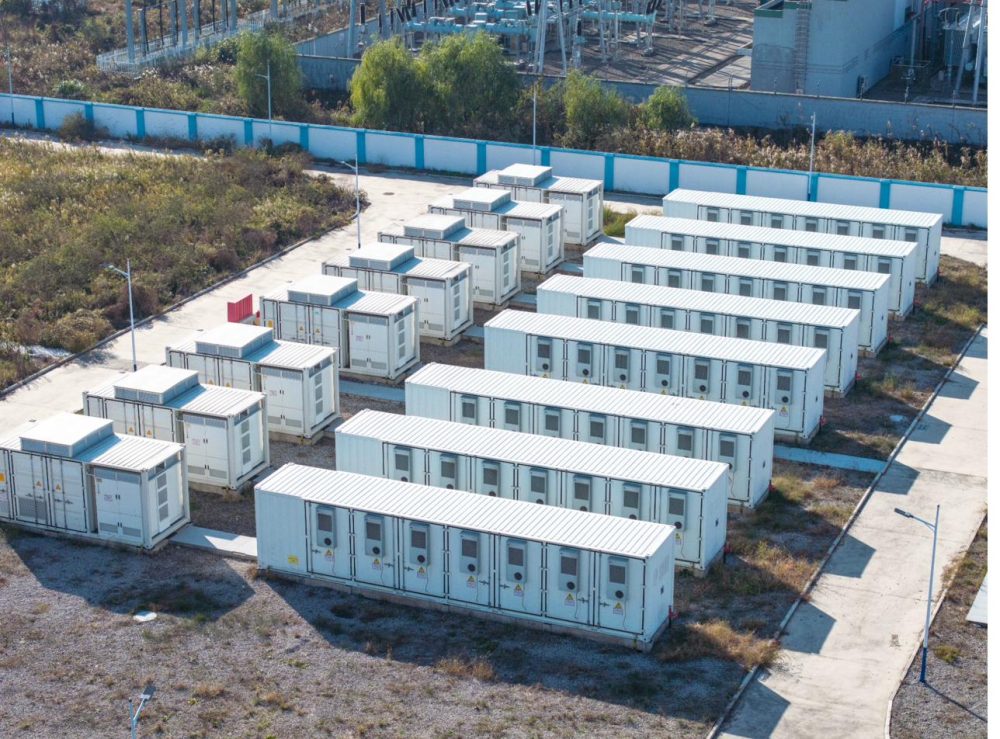
Industrial BESS Park: typical volume for a 50 GWh mid-cap reinvestment.
BESS Contracting
0 € CapEx Customer
— CUBE provides full financing
Revenue split: CUBE 75 % / customer 25 % of the net market revenue after OPEX
BTM revenues, including §19 atypical grid usage savings, remain 100% with the customer
Implementation by third parties permitted, including financing (BAFA information sheet on decarbonisation measures, section 3.5)
BESS purchase
Full investment client — Scale ~250 €/kWh up to 2 MWh, from 5 MWh 175–200 €/kWh
100 % revenue from the customer — including ISP credit as own reinvestment
Full market participation in regulating energy and the spot market
Turnkey delivery with warranty
CPFS
Standalone product for medium-sized business constellations
€0 CapEx Customer · CUBE 75 % / Customer 25 %
Optimized for 1–4 MW BESS sizes
Eligible as electricity storage under no. 4.1 c) of the guideline (BAFA information sheet on decarbonisation measures, section 2.3)
Photovoltaics (Contracting / Buy)
PV rooftop and ground-mounted systems as recognized reinvestment
Self-consumption directly reduces electricity purchase costs
Combinable with BESS for load shifting and self-consumption optimization
Subsidiary law recognition of the PV investment as fulfillment of the ISP reinvestment obligation
Economic models are based on public market benchmarks. Specific calculations for each site are prepared in the load profile meeting.
Realized Projects with Industrial Companies
CUBE CONCEPTS develops and implements energy projects across Europe. A selection of the industrial partners:
TI Automotive
Magna
Valeo
voestalpine
Tenneco
ITW
FAQ
Frequently asked questions
What is the industrial electricity price and who decided on it?
Which companies are eligible to apply?
What is the effective relief actually?
What counts as a recognized reinvestment measure?
Can the reinvestment be implemented through a service provider?
How does the +10 % flexibility bonus work?
Can the industrial electricity price be combined with electricity price compensation?
What happens after the end of 2028?
Application deadline for the billing year 2026: March 31, 2027.
Final cost analysis in 30 minutes. Sector allocation, subsidy estimation, reinvestment plan with BESS or PV modeling. Third-party implementation options for €0 CapEx burden.
Further content
Further reading
Sources and Legal Basis
- EU Commission, Clean Industrial Deal State Aid Framework (CISAF) — adopted 25.06.2025, valid until 31.12.2030. Section 4.5 on temporary electricity price relief for energy-intensive users. CISAF on competition-policy.ec.europa.eu
- BMWE press release 16.04.2026 — „Industrial electricity price to be introduced”. BMWE press release
- KUEBLL 2022 Annex I (Part List 1) — EU guidelines on state aid for climate, environmental protection and energy, Annex I with the list of the 91 eligible sectors. KUEBLL full text (EUR-Lex)
- BAFA - Industrial Electricity Price Application Process — Information leaflet on industrial electricity prices and information leaflet on decarbonization measures, as of August 4, 2026. Submission of applications through the German Funding Center is expected to begin in December 2026; application deadline for the 2026 billing year is March 31, 2027. Federal Office for Economic Affairs and Export Control
- CUBE CONCEPTS model calculation — Practical examples are based on public market benchmarks and CUBE internal load flow modeling over 250 operating variants. Assumptions: Previous year futures at 8.7 ct/kWh as the reference price.
Status & notes
Content as of: May 6, 2026. The German funding guideline for the industrial electricity price is binding since the EU aid approval on April 16, 2026. The BAFA published the information sheets for the application process on August 4, 2026. Content will be updated in case of significant changes.
Model calculations: All figures are model calculations based on public market benchmarks. The actual aid amount depends on the previous year's reference price, electricity consumption, sector classification and reinvestment measure.
This is not legal or tax advice: The content does not replace individual legal, tax or funding advice. For submitting an application to the BAFA, we recommend project-specific guidance from knowledgeable bodies — particularly from 10 GWh of eligible electricity consumption (mandatory WP note).
