



Table of Contents
ToggleBrief overview
- Decision: The coalition committee decided on November 18, 2026, to reduce the electricity tax from 2.05 ct/kWh to the EU minimum from January 1, 2027 (reported: 0.1 ct/kWh).
- Duration: The reduction is initially funded only for 2027, through free funds from the EEG account.
- Winner: Retail, service providers, logistics and other non-manufacturing companies save around 1.95 ct/kWh.
- Almost no effect: The manufacturing sector has been paying the EU minimum wage since the beginning of 2026.
- Obstacles: The three network charges will increase by 0.675 ct/kWh (+23%) in 2027, and the transmission network fee by about 24%.
- Lever: Grid costs can be permanently reduced through peak loads, special grid fees, and self-consumption – regardless of the tax policy.
The basics regarding height, exemptions, and EU comparisons can be found in our article. Electricity tax for businesses.
What exactly was decided
The electricity tax rate for all consumers is to be reduced to the „European minimum“ of 2.05 ct/kWh by January 1, 2027. A new rate of 0.1 ct/kWh is currently being generally reported as equivalent to the EU minimum for private households. For commercial use, the European Union actually stipulates a minimum of 0.05 ct/kWh. The German government is initially only providing the counterpart funding of 1.95 cents per kilowatt-hour for 2027.
| As of 20.11.2026 | |
| New electricity tax rate | General EU minimum, reported at 0.1 ct/kWh (previously 2.05 ct/kWh) |
| Duration of validity | from 1 January 2027, initially for a limited period of one year |
| Costs for the federal government | around 5.4 billion euros per year |
| Financing 2027 | Funds in the EEG account: around 4.2 billion euros less needed than budgeted |
| From 2028 | Permanent reduction „intended“, funding open |
| Legislation | The amendment to the electricity tax law is still pending; the 2027 budget is scheduled to be approved in the Bundestag on November 27th. |
If the money in the EEG account is not enough, a package of measures will follow. Discussions include reducing subsidies or increasing the tax on income.
Important for planning: As long as the law has not been adopted, this is a political agreement. Those who prepare budgets for 2027 and 2028 should plan for the reduction for 2027, but should not include it in their calculations for 2028.
Who benefits – and who doesn’t
New relief will primarily be provided for companies that are not part of the manufacturing sector. They will still pay the full rate of 2.05 ct/kWh in 2026 and will save around 1.95 ct/kWh from 2027 onwards.
| Corporate group | Electricity tax 2026 | 2027 after a decision | Effect |
| Trade, services, logistics, gastronomy, hotels, offices, data centers | 2.05 kWh | approx. 0.1 ct/kWh | around –1.95 ct/kWh |
| Manufacturing industry, agriculture and forestry | effectively 0.05 ct/kWh (relief upon request, self-insurance 250 €) | EU minimum | practically no change |
| Small businesses in the manufacturing sector with less than 12,500 kWh/year | in fact 2.05 ct/kWh (self-pay) | approx. 0.1 ct/kWh | Relief without application |
The manufacturing sector, as well as agriculture and forestry – according to the Federal Government, over 600,000 companies – have already paid the EU minimum commercial rate of 0.05 ct/kWh since 2024. This measure, initially introduced on a temporary basis as part of the electricity price package, has now been extended beyond its original deadline and is now permanent. For these businesses, the new decision does not provide any additional relief. It remains unclear whether the application procedure under § 9b StromStG 2027 will be eliminated. This would primarily be a bureaucratic simplification. For the consumption year 2025, the application must still be submitted to the main customs office by December 31, 2026.
Calculation example: A logistics center with a 1 GWh (1,000,000 kWh) annual consumption has so far paid 20,500 euros in electricity tax. At 0.1 ct/kWh, that would still be 1,000 euros in 2027, which is about 19,500 euros less. A manufacturing company of the same size already effectively pays around 500 euros today and does not feel any change.
Why the „industrial electricity price“ says little
There is no uniform electricity price for industry and commerce. Larger consumers negotiate delivery contracts individually, and the network charges depend on the network area, voltage level, and load profile.
For reference: The BDEW has so far calculated the average price for supply contracts for small to medium-sized industrial companies at 17.2 ct/kWh in 2026. This figure is a simple average from five consumption cases between 160,000 kWh and 20 million kWh per year, drawn from the medium-voltage grid. Your own price may significantly differ from this.
More important than the average is the structure of your own account:
- Procurement and distribution: negotiable freely, depending on the timing and procurement strategy
- Network charges regulated, set by the network operator in the price list; when measuring performance, it consists of a price for the power (€/kW) and a cost per unit of work (ct/kWh)
- Imposition of taxes: KWKG fee, offshore network fee, surcharge for special network use
- Taxes and duties: Electricity tax, concession fee
In Germany, the electricity tax is a fixed amount per kWh. The network charges, on the other hand, respond to consumption patterns: Those who reduce their annual peak load lower the price of electricity. This is where the greater leverage lies for many companies.
The headwinds: Network charges and network levies in 2027
While the electricity tax is decreasing, the network-related costs will rise in 2027. The reason: The federal government is reducing its subsidy for transmission network costs from around 6.5 billion euros (2026) to 5.525 billion euros per year for 2027 to 2029.
Transmission network fee: The average fee for the transmission network will increase from 2.86 to 3.54 ct/kWh net in 2027 (provisional, +24%).
Without a federal subsidy, the transmission network fee would be 6.52 cents/kWh in 2027. Most businesses are not directly connected to the transmission network. The increase is passed on to them through the distribution network fees – how much depends on the respective network operator. In 2026, commercial customers in the medium voltage sector benefited from the subsidy at an above-average rate, with relief of around 10 percent.
Grid fees: Unlike the transmission network fee, the three statutory levies are directly included in each electricity bill. They will increase together in 2027 by 0.675 ct/kWh.
| Network charge (net) | 2026 | 2027 | Change |
| Premium for special network usage (up to 1 GWh)* | 1,559 ct/kWh | 2,027 ct/kWh | +0.468 ct/kWh (+30%) |
| Offshore grid levy | 0.941 ct/kWh | 1,143 ct/kWh | +0.202 ct/kWh (+21%) |
| KWKG levy | 0.446 ct/kWh | 0.451 ct/kWh | +0.005 ct/kWh |
| Sum of the three surcharges | 2,946 ct/kWh | 3,621 ct/kWh | +0.675 ct/kWh (+23%) |
*The full rate applies to the first 1,000,000 kWh (1 GWh) of annual consumption; a significantly reduced rate applies to consumption above that. Offshore network charges and KWKG surcharge apply to all consumption, unless there is a limit under the EnFG.
All values for 2027 are provisional: The subsidy law has not yet been adopted. If legal certainty is not achieved by December, transmission network operators expect higher final charges and a higher surcharge for special network use.
What remains at the end
The following calculation only shows electricity taxes and levies. Changes in distribution network fees are added depending on the network area.
| Example 2027 vs. 2026 | Logistics center, 1 GWh/year | Production facility, 5 GWh/year |
| Electricity tax | –€19500 | ±0 € |
| Charges | +€6750 | approx. +15.000 € |
| Balance before network charges | approx. –12.750 € | approx. +15.000 € |
For production-based businesses, the increased surcharge for special network usage only applies to the first gigawatt hour; a significantly reduced rate applies thereafter. Offshore and KWKG fees apply to the entire consumption, unless there is a limit under the EnFG. The result: For medium-sized businesses in the production sector, electricity will tend to be more expensive in 2027, not cheaper.
Looking ahead: AgNes from 2029 onwards
Network costs in Germany are around 37 billion euros per year and continue to rise with network expansion. The Federal Network Agency is therefore introducing a reform to ensure that the costs are covered by the network operator.„AgNes“The network charges will be revised from 2029 onwards, and the Electricity Network Ordinance (StromNEV) including § 19 with the baseload-Privilege and the Atypical network usage No longer required. For consumers consuming over 100,000 kWh per year, the current price per unit of electricity will be replaced by a freely selectable capacity price, with a higher labor cost for exceeding the ordered capacity. The framework regulation is to be issued by the end of 2026, with subsequent regulations coming in 2027.
For companies, this means that those who know and can control their peak load will be rewarded even more in the future.
What companies can do now
The electricity tax reduction comes automatically – you have to actively control your network costs. These steps are worth doing before the new year:
- Check price lists: Compare your network operator's preliminary price list for 2027 with 2026, separately for the cost of service and the cost of work.
- Reviewing delivery contracts: How will the changed taxes, levies and network charges be passed on? Will the electricity tax reduction affect you?
- Analyzing the last run: When do your peak loads occur, and what is the proportion of the performance fee to your net costs?
- Cap the ends: With peak shaving, for example through a battery storage system, it is possible to reduce the power that is relevant for billing. This directly affects the price of power.
- Review special network charges: A non-typical use of the network in accordance with § 19, paragraph 2 of StromNEV can significantly reduce the network fees. The current regulation expires at the end of 2028.
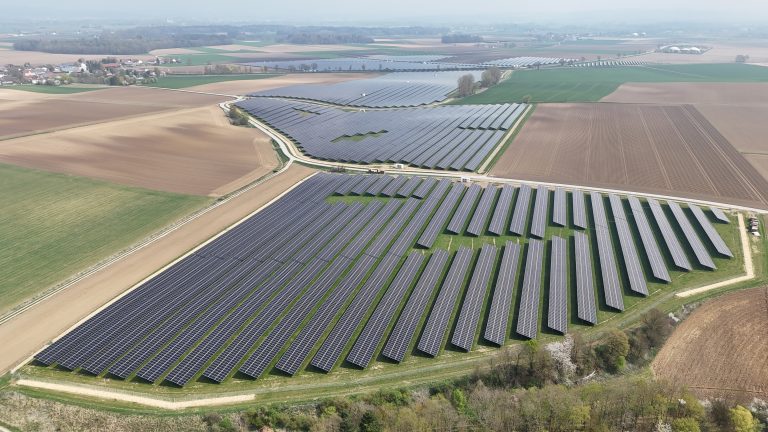
- Increase self-consumption: Self-generated PV electricity that is consumed locally is not subject to network charges and network fees. With storage, the share of self-consumption increases.
- Don't forget to apply: Apply for the electricity tax relief under § 9b for 2025 through 31.12.2026; for companies with high electricity costs, review the cap on levies under the EnFG.
The advantage of measures for peak loads and self-consumption: They are not dependent on whether a tax reduction is extended after 2027. And with the AgNes reform, flexible consumers are expected to be rewarded even more strongly from 2029 onwards.
Conclusion
The electricity tax reduction in 2027 is a real relief for trade, service providers, and logistics – around 1.95 ct/kWh. For manufacturing businesses, it changes almost nothing, because the EU minimum rate already applies there since the beginning of 2026.
At the same time, network charges will rise by around 0.68 ct/kWh in 2027, and the transmission network fee will increase by about a quarter. For many industrial companies, electricity will therefore become more expensive in 2027. Moreover, the electricity tax is only secured for one year, while network costs will continue to grow structurally.
The more sustainable leverage lies therefore not in Berlin, but in our own power generation: By reducing peak loads and generating and storing more electricity ourselves, we permanently reduce our grid costs – regardless of the next budget negotiation.
Have your load management analyzed for free. In a 30-minute initial consultation, we will show you the potential savings in performance costs and network fees in your operation.
FAQ on the electricity tax reduction in 2027
From when does the electricity tax drop for all companies?
The planned date is January 1, 2027. The amendment to the electricity tax law still needs to be approved.
What is the electricity tax in 2027?
It is said to fall to the EU minimum; a rate of 0.1 ct/kWh is reported instead of the previous 2.05 ct/kWh.
Does the manufacturing sector benefit from the new reduction?
Not really. It has been paying the EU minimum rate of effectively 0.05 ct/kWh since 2024 and already since 2026.
Will the reduction also apply after 2027?
This is open to discussion. A permanent reduction is intended, but the funding is not clear as of 2028.
Why will network charges increase in 2027?
The federal subsidy for transmission network costs is decreasing from around 6.5 to 5.525 billion euros, and network expansion is causing rising costs. The network charges are also rising by around 23 percent combined.
Sources
- pv magazine: Federal government finds billions for reducing the electricity tax under the EEG (18.11.2026)
- Federal Government: Relief measures for energy prices (18.11.2026)
- LHM Energy Tax: Electricity tax reduction for everyone – status and schedule
- Traffic Rundschau: Electricity tax to be lowered – but only for one year at first
- Industrial expertise: electricity price in 2027 for industry and commerce
- IHK Magdeburg: Statutory electricity charges to rise by 23 percent in 2027
- BDEW electricity price analysis autumn 2026
- ZfK: Grid tariff adjustment in 2026 – relief for medium voltage
- Federal Network Agency: AgNes consultation