

While the Energy debate In Germany, the debate between politicians and experts over the costs of capacity markets and hedging obligations has long been settled: battery storage systems (BESS) belong in every scenario to the big winners. Because no matter which Electricity market design is introduced or companies will have to prove self-secured performance in the future – Flexibility is becoming the new currency in the energy system. And exactly this flexibility is provided by modern battery storage systems: they compensate for fluctuations, stabilize grids, and provide secured power – in fractions of a second and completely emission-free.
This makes battery storage systems (BESS) represents one of the safest energy policy bets for companies in the coming decades. Operators protect themselves from rising procurement costs, strategically position themselves for reforms in the market model, increase their supply security, and protect themselves from growing regulatory requirements. For companies that invest in storage solutions early on, this means not only risk minimization but a clear competitive advantage.
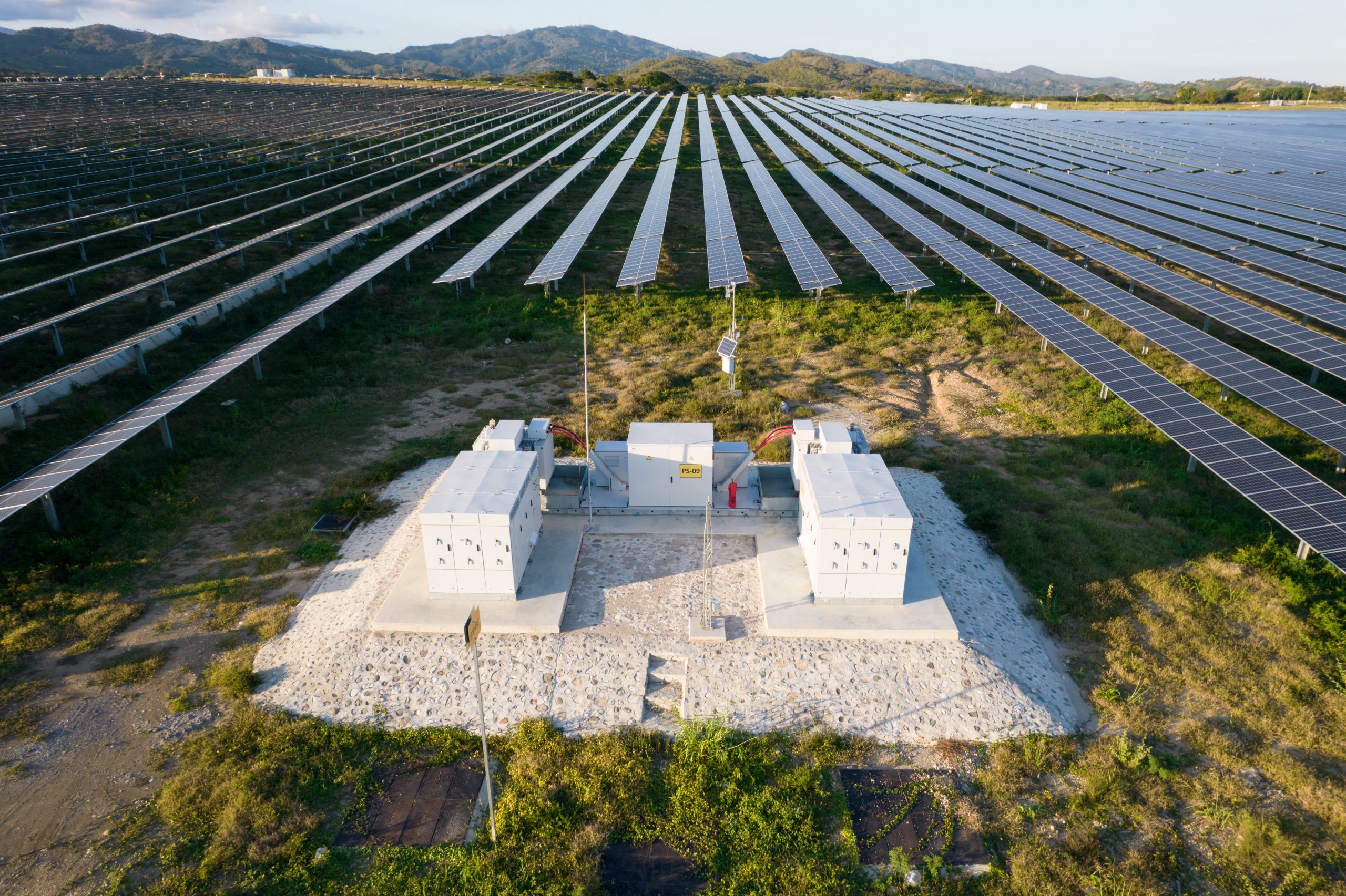
From the energy-only market to the new optimum: Flexibility
Until now, the focus has been on generating affordable electricity on one's own German electricity market and the energy debate, the rapid expansion of renewable energy sources is shifting the focus. What matters now is delivering electricity at the right time. In a system that increasingly relies on solar and wind power, flexibility becomes decisive factor. Companies, grid operators, and energy providers must be able to react to fluctuations at all times – not only to keep grids stable but also to remain economically viable. Power, not energy The new motto is: whoever can guarantee electricity availability wins.
The simplest solution for more flexibility is BESS, whose prices have dropped in the last two years. They react faster than any other system to grid signals, balance load peaks, and take on grid control tasks that were previously reserved for conventional power plants. Through this ability to both store energy and provide short-term power, BESS are becoming the central flexibility resource in every conceivable electricity market design.
This also changes the strategic perspective for companies: while classic power purchase agreements (PPAs) primarily aim for price stability, storage solutions open up new revenue streams – for example, through Peak shaving, Network charge reduction or Power trading. flexibility becomes from a technical byproduct to strategic economic factor, that determines competitive advantages.
BESS in the context of the energy debate
Regardless of whether Germany ultimately opts for a central capacity market, a hedging obligation, or hybrid combinations, storage technologies are a central element in every model.
I'm Capacity marketModel Batteries generate additional revenue by being compensated for holding capacity. Operators receive payments for their grid security – an attractive business model, particularly for large storage units in industrial parks or neighborhood projects.
In the model of Obligation to obtain coverage In contrast, the economic incentive arises decentrally and close to the market. Companies can use their storage flexibly to cover their own supply obligations or sell them to third parties – for example, to energy suppliers who must prove contractually secured capacity. This puts BESS operators on par with gas power plants or CHP plants, but with the advantage of emission-free and highly dynamic responsiveness.
Hybrid models, which are currently the focus of political attention, combine both principles. They reward those actors who offer efficiency, flexibility, and security of supply at the same time – an ideal environment for high-performance battery storage systems.
Economic Benefits of BESS for Businesses
Industrial and commercial companies that rely on BESS benefit in multiple ways:
- Cost stability: Through peak load clippingPeak Shavingcan reduce network fees.
- Potential for Added Value: Revenues from ancillary or flexibility markets supplement the core business.
- Risk mitigation: Having your own flexibility reserves protects against price volatility.
- Sustainability: Battery storage promotes climate goals and ESG compliance.
- Investment advantage: Storage increases location value in a carbon-priced economy.
With rising CO₂ prices and volatile markets in view, the combination of self-supply, flexibility, and market participation is becoming a strategic differentiator. Companies that integrate battery storage today will be active co-shapers of the electricity market tomorrow – not just price-takers.
Framework Conditions: EU Directives & Safety through BESS
The EU Electricity Market Directive (Art. 18a) obliges all member states from 2027 to introduce measures for a „security of supply obligation.“ This makes flexibility no longer optional, but systemically necessary.
Storage facilities are considered a „key enabler“ of this policy because they ensure short-term availability while operating without fossil emissions. The Federal Network Agency is working on scenarios for how BESS can be integrated into supply security reserves (VSRs) and capacity mechanisms in the future. It has already made the first move in this direction as part of the „Market Integration of Storage Facilities and Charging Points“ (MiSpeL) submitted.
For project developers and investors, this means: energy projects with an integrated storage component will be regulatorily preferred in the future – both in terms of grid connection priority and market admission for flexibility markets.
Strategic Independence for Companies in the Energy Debate
The transformation of the electricity market presents enormous opportunities for businesses. Battery storage systems have long since become more than just a technical add-on. They are a strategic asset and, when combined with renewable energy systems, help secure a company’s future energy supply. Businesses that invest in BESS today or utilize the Contracting model protect themselves against rising electricity prices and create new sources of revenue.
Economic added value arises on several levels:
- Self-consumption & Peak ShavingPeak load reduction and grid charge savings through intelligent Load shifting.
- Ancillary Services & Capacity Markets: Additional Revenue by Providing Secure Capacity and Participating in Ancillary Services Markets.
- Security Obligation & Performance Certificates: Trading Flexibilities as a New Business Model – Especially for Companies with Onsite Storage.
- Cost optimization and independence in electricity: Integration into PV concepts and dynamic electricity tariffs enable predictable energy costs for years to come.
In combination with photovoltaics, heat pumps, or load management, the storage system becomes the central control unit for modern energy concepts. It combines economic efficiency with climate goals and creates a new form of entrepreneurial sovereignty: control over energy availability, costs, and supply security.
Companies that take this step today are positioning themselves optimally – both in relation to future regulatory requirements and in the competition for stable and sustainable energy prices.
Conclusion: The future belongs to storage
Regardless of which electricity market design prevails politically – whether a capacity market, hedging obligation, or a hybrid model – battery storage systems are the backbone of the new energy world. They provide the flexibility, security of supply, and economic efficiency that the energy system of the future demands.
For industry, commerce, and project developers, this means: storage systems are no longer an option, but a prerequisite for actively leveraging the opportunities of the energy market. They not only compensate for fluctuations but also make renewable energies predictable and marketable.
In an era when energy is increasingly becoming a strategic competitive factor, BESS (Battery Energy Storage Systems) are the safest energy policy bet of the coming decade. They combine climate protection with economic efficiency and are the key to a stable, flexible, and future-oriented power system - for companies that are already thinking about tomorrow today.