



Table of Contents
ToggleBrief overview
- Due date: The EU Commission’s approval of the EEG for aid purposes is valid until December 31, 2026.
- As of: The EEG 2027 has not yet been adopted (as of November 24, 2026). The Bundestag and the Bundesrat intend to decide in December. After that, the EU Commission must still approve the amendment.
- Existing facilities: Plants that start operating by the end of 2026 retain their entitlement to funding.
- New plants: New installations with commissioning starting from January 1, 2027 do not have a guaranteed EEG subsidy claim until approval is granted. Whether they are subsidized retroactively is decided by Brussels.
- Tenders: The first bidding deadlines in 2027 may be postponed or cancelled.
- Industry and commerce: Self-consumption, peak load curtailment, and battery storage are not dependent on EEG subsidies. Projects that can be justified by self-consumption are significantly less affected.
Why the EEG requires an EU approval
EEG subsidies are considered state aid under European law. Any changes relevant to subsidies must therefore be approved by the EU Commission. The current approval for the EEG 2023 is valid until December 31, 2026 for a limited time.
If the new EU approval is not granted, the implementing ban under Article 108(3) TFEU (Treaty on the Functioning of the European Union) will be applied. New aid claims will then not be valid. This also applies even if the EEG 2023 simply remains in effect as a national law.
Where does the EEG 2027 stand?
The EEG 2027 is expected to be approved shortly before Christmas 2026. The approval from Brussels will therefore arrive no earlier than around the turn of the year, rather later.
| Date | Step |
| 29.07.2026 | Federal Cabinet approves EEG amendment and grid connection package |
| September 2026 | Draft bill is before the Bundestag (document 21/7867), first reading |
| Mid-November 2026 | Political experts from the Union and the SPD agree on changes, including a fixed remuneration for systems up to 25 kW |
| December 2026 | Planned 2nd/3rd reading in the Bundestag |
| at the earliest 18.12.2026 | Federal Council vote |
| Later / open | Aid approval by the European Commission |
In addition, the Union is linking its approval to an agreement on the network package being discussed in parallel. It is not possible to predict how long the Commission will take to review it. Previous procedures usually took several months.
What will happen without permission starting January 1, 2027
Without an EU permit, a funding gap will arise for new installations starting January 1, 2027. Existing installations and installations that have not received funding are not affected.
| System or process | Follow without permission |
| Existing facilities (commissioning until 31.12.2026) | The eligibility requirement remains unchanged |
| New PV installations without tender (commissioning from 1.1.2027) | No guaranteed entitlement to funding until approval has been granted. Retroactive funding is possible; in the worst case, the entitlement will be permanently lost. |
| Tenders (e.g. Solar February and March 2027) | Bidding deadlines may be delayed or cancelled |
| Additional charges from bid deadlines in 2026 | According to the draft, these regulations should apply under the old law. Lawyers consider this to be legally uncertain. |
| Unproduced installations (self-consumption, PPAs, other direct marketing) | No EEG subsidies applied for, therefore no funding risk |
The government draft EEG 2027 & Grid Package The new rules for new installations explicitly place them under an approval condition (§ 104 EEG 2027-RegE). For onshore wind, a workaround exists: If the bidding deadline on February 1, 2027 falls, the volume is distributed between May and November (§ 103). There is no such rule for solar yet.
Three scenarios for 2027
A legal opinion prepared by the law firm RAUE for the Federal Association for Renewable Energy (BEE) describes three possible paths. In all three, a gap is likely; it is just of different length.
- Law on time, approval later: The EEG 2027 enters into force on January 1st; the EU will only approve it during the course of the year. Until then, the new funding rules do not apply to new installations.
- Law and approval not until 2027: The law itself does not come into effect until January 1st. The gap will therefore be longer.
- „Small“ novella as a bridge: A slim transitional solution that could be approved by Brussels more quickly. According to the Foundation for Environmental Energy Law, a renewed, short-term approval of the current law would also be conceivable.
Important for classification: Late approval can apply retroactively. The Foundation for Environmental Energy Law considers the damage to the systems that will be connected to the grid in the meantime to be legally limited. However, there is no guarantee of this.
Commercial PV: Self-consumption beats feed-in
For industry and commerce, the funding gap is primarily a question of the business model. Those who feed electricity into the grid and rely on market premiums or feed-in payments bear the risk. Those who consume the solar electricity themselves are hardly affected.
The reason: Self-consumption is not an EEG subsidy. Every kilowatt-hour used for self-consumption replaces expensive grid electricity, regardless of when Brussels approves it. In typical commercial rates, that is already the biggest value-added factor for a rooftop system.
Battery storage as a lever in the transition phase
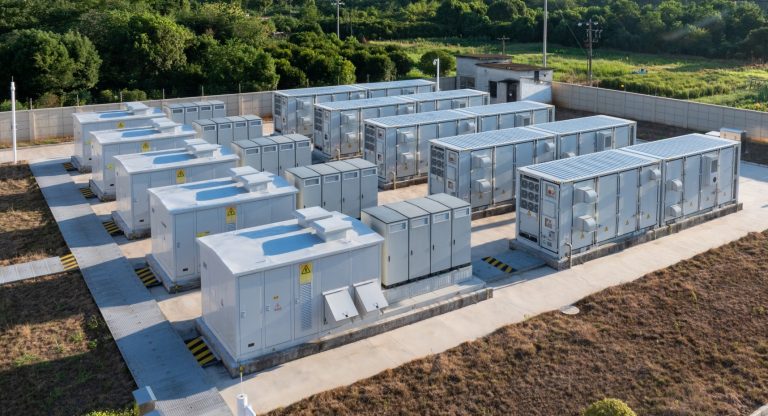
A Battery storage It shifts the economics further towards self-consumption:
- Higher self-consumption rate: Solar electricity generated in the afternoon is stored and used later in operation instead of being fed in.
- Peak Shaving: The storage system smooths out peak loads and thus reduces power-dependent network charges.
- Independence from the funding framework: Both effects operate without EEG subsidies and are not affected by the aid issue.
In short: A PV project that covers both self-consumption and storage does not have to wait for the Bundestag, the Federal Council, or Brussels.
How new PV plant operators should now behave
- Check commissioning dates: Can a planned, subsidized facility be put into service by December 31, 2026? Then the current law certainly applies.
- Calculating the business model: Projects with commissioning in 2027 are calculated with and without EEG subsidies.
- Maximize self-consumption: Align the size of the investment to the own load profile instead of to the feed-in.
- Planning storage: A battery storage system for self-consumption and Peak load capping incorporate it into the design from the very beginning.
- Keep financing flexible: ContractingModels shift investment and risk to the contractor and make projects independent of the funding schedule.
- Follow development: Keep an eye on the Bundestag decision in December and the decision of the EU Commission.
Frequently asked questions about the EEG funding gap 2027
What happens with the EEG on January 1, 2027?
The EU approval of the EEG 2023 expires on December 31, 2026. Without a new approval, no new eligibility claims may be submitted from January 1, 2027, even if the law formally remains in effect.
Will existing PV systems lose their subsidies?
No. Plants that come into operation by December 31, 2026, retain their eligibility for funding.
Will new PV installations receive subsidies from 2027 onwards?
Only when the EU Commission has approved the EEG in 2027 will there be no guaranteed entitlement to feed-in tariff or market premium until then.
Can the funding be paid retroactively?
Yes, a permit can be applied retroactively and cover installations that are put into operation in the meantime. Whether this will happen is up to the European Commission.
Is an industrial PV system worthwhile despite the funding gap?
Yes, if it is designed for self-consumption. Self-consumed solar electricity replaces grid electricity and is not subject to EEG subsidies.
What role does a battery storage system play?
A storage system increases the self-consumption rate and cuts peak loads. Both of these reduce electricity costs regardless of the funding framework and make a project more robust against a funding gap.
Sources
- BSW-Solar: Prevent possible funding stop from January 2027 (Solarserver, 10.11.2026)
- Statement by the Foundation for Environmental Energy Law on the EEG 2027 (German Bundestag)
- Legal opinion by RAUE for the BEE (lobby register of the Bundestag)
- EEG amendment likely not until December in Bundestag and Bundesrat (pv magazine, 06.11.2026)
- The Bundestag is discussing the EEG amendment (pv magazine, 12.11.2026)
- BDEW on the future funding framework for renewable energy
- Cabinet decides on EEG amendment and network package (Federal Government)
Status: November 24, 2026. This article does not replace legal advice.